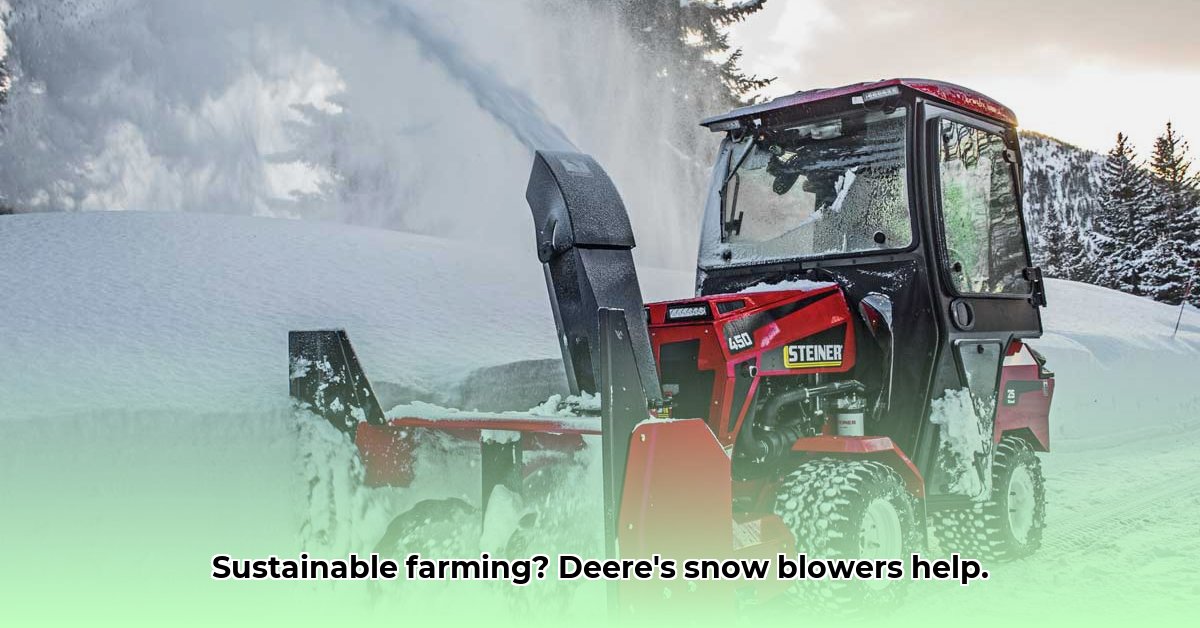
Snow Blower with Tractor: Revving Up Sustainable Farming Yields
Efficient snow removal is paramount for maintaining timely planting and harvesting schedules in agriculture. Deere tractor-mounted snow blowers offer a significant advantage by rapidly clearing large areas, minimizing delays that could compromise yields. A prompt start to the growing season directly translates to higher productivity and improved profitability, a key factor in sustainable farming practices. This enhanced efficiency allows farmers to seize every opportunity for optimal crop growth. Learn more about tractor snow blowers here. How much time could you save this planting season with a Deere snow blower?
Clearing the Path to Higher Yields
The impact of efficient snow removal extends beyond simply faster planting. Deere's heavy-duty snow blowers protect valuable farm infrastructure from the damaging effects of accumulated snow. Irrigation systems, fencing, and other essential equipment are vulnerable to damage from heavy snow loads. Minimizing this damage translates into significant cost savings on repairs, reducing both financial burden and the environmental impact associated with material replacement. By protecting existing infrastructure, Deere snow blowers contribute directly to the long-term sustainability of farming operations. Are you ready to reduce your repair costs this year?
Protecting Your Investment: Infrastructure Integrity
Protecting your investments equates to protecting your long-term profitability and environmental responsibility. The cost savings from reduced infrastructure damage through the use of Deere's efficient snow removal systems contribute significantly to financial sustainability. Avoiding these repair costs also decreases the environmental impact linked to material production and disposal, aligning with principles of sustainable farming. Every dollar saved is a dollar reinvested in sustainable farming practices. How much is the preservation of your infrastructure worth to your farm's bottom line?
The Environmental Equation: Weighing the Pros and Cons
While Deere snow blowers offer substantial benefits, their environmental impact warrants careful consideration. The high energy consumption of these machines contributes to greenhouse gas emissions. However, advancements in technology offer some mitigation strategies. The development of alternative fuels, such as biodiesel, and improvements in engine efficiency are actively underway, aiming to lessen the environmental footprint. Furthermore, the long-term benefits of reduced infrastructure damage and improved operational efficiency can offset the increased emissions, contributing to a more balanced environmental equation.
Navigating the Nuances: Location, Farm Size, and Snow Type
The optimal snow removal solution is heavily influenced by several factors. The type and depth of snow significantly affect the required equipment. Heavy, wet snow requires different machinery and techniques compared to light, fluffy snow. The size of the farm dictates the appropriate scale of equipment; smaller farms may benefit from smaller, more fuel-efficient models, while larger operations necessitate more powerful machines. Furthermore, organic and sustainable farming practices necessitate careful consideration of the environmental footprint of these machines. Selecting the right equipment for specific conditions is critical for maximizing efficiency and minimizing environmental impact. How are you currently adapting your snow removal strategy to your specific geographical conditions?
Actionable Steps for Sustainable Snow Removal
This section outlines actionable recommendations for various stakeholders, focusing on both short-term and long-term strategies for sustainable snow removal.
Farmers:
- Short-Term: Compare the costs and benefits of manual versus machine snow removal. Prioritize proper equipment maintenance to maximize fuel efficiency.
- Long-Term: Investigate electric or hybrid tractors for snow removal; explore preventative snow management strategies (e.g., snow fences).
Deere & Company:
- Short-Term: Conduct detailed lifecycle assessments of snow blowers to identify areas for improvement.
- Long-Term: Invest in research and development of alternative power sources and sustainable materials for snow blower construction; improve recycling programs and promote responsible disposal.
Researchers:
- Short-Term: Study the correlation between efficient snow removal and crop yields.
- Long-Term: Develop models to predict snow accumulation and its impact on agricultural operations; investigate the development of low-emission snow removal technologies.
Government Agencies:
- Short-Term: Offer financial incentives to farmers for adopting sustainable snow removal practices.
- Long-Term: Fund research and development into eco-friendly agricultural technologies; create stricter emission standards for agricultural equipment.
A Look Ahead: Future Regulations and Adaptation
The agricultural landscape is evolving with stricter emission standards and a growing demand for sustainable materials. Manufacturers, like Deere, must adapt by developing fuel-efficient and ecologically conscious snow removal systems. This challenge simultaneously presents an opportunity for innovation and a drive towards a more sustainable future in agriculture. How is your farm preparing for the changing regulatory environment?
Embracing Sustainability: A Holistic Approach
Sustainable farming requires a holistic approach that balances productivity with environmental stewardship. Deere snow blowers enhance productivity, but minimizing their environmental footprint is crucial. A commitment to research, innovation, and responsible practices is essential for a truly sustainable future in agriculture. By addressing both the benefits and the environmental considerations of snow removal, we can pave the way for a healthier planet and a more resilient agricultural system.